Share
Share
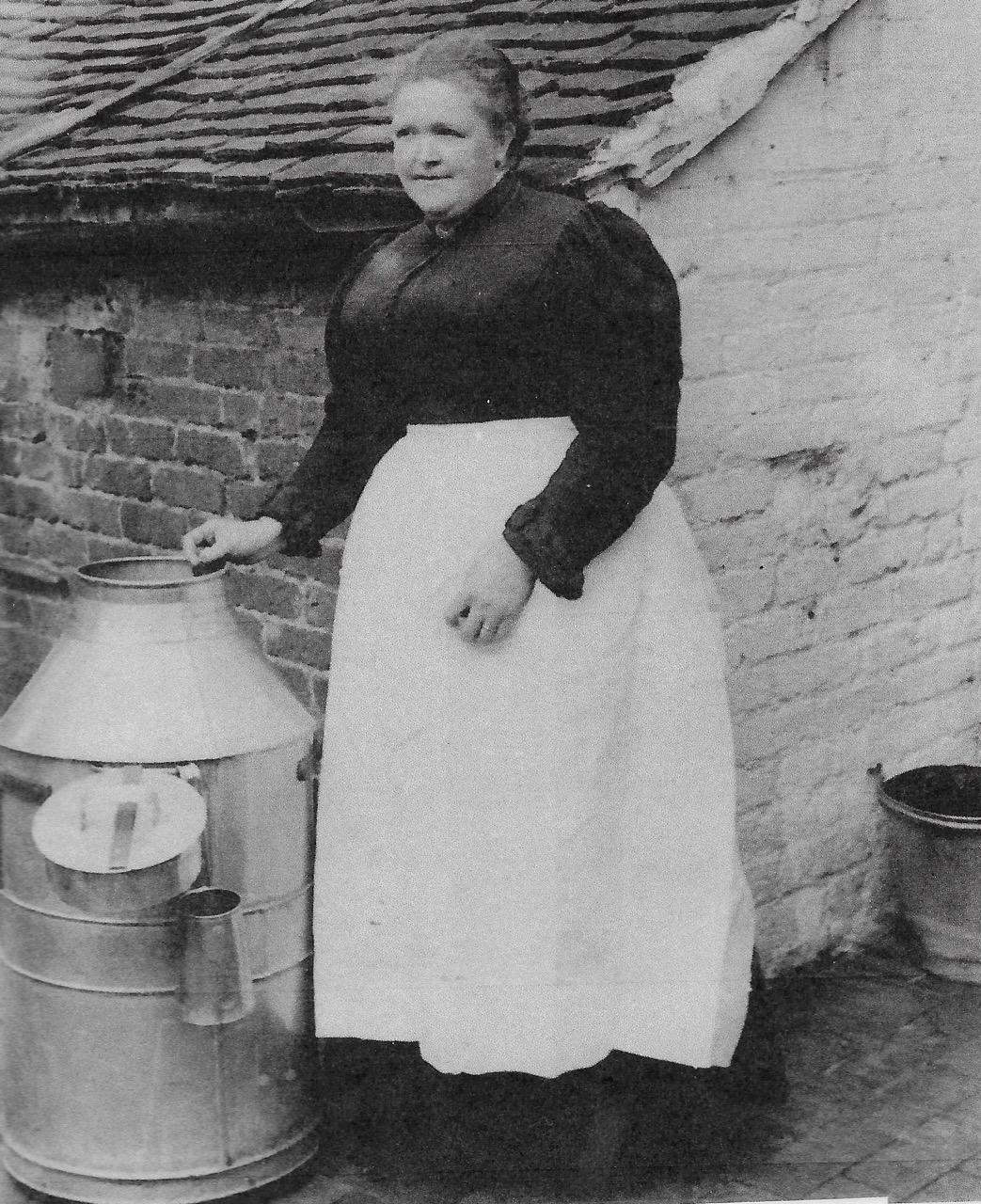
Shifnal-Knowle Farm-Mrs-Mary Lee-1920s Large
Mrs. Mary Lee of Knowle Farm, photographed in the early 1920s with a spotless milk churn used for her deliveries. In 1919, she secured the contract to supply milk to the local workhouse, marking a significant achievement in her farming career.
Shifnal people: delivering the milk
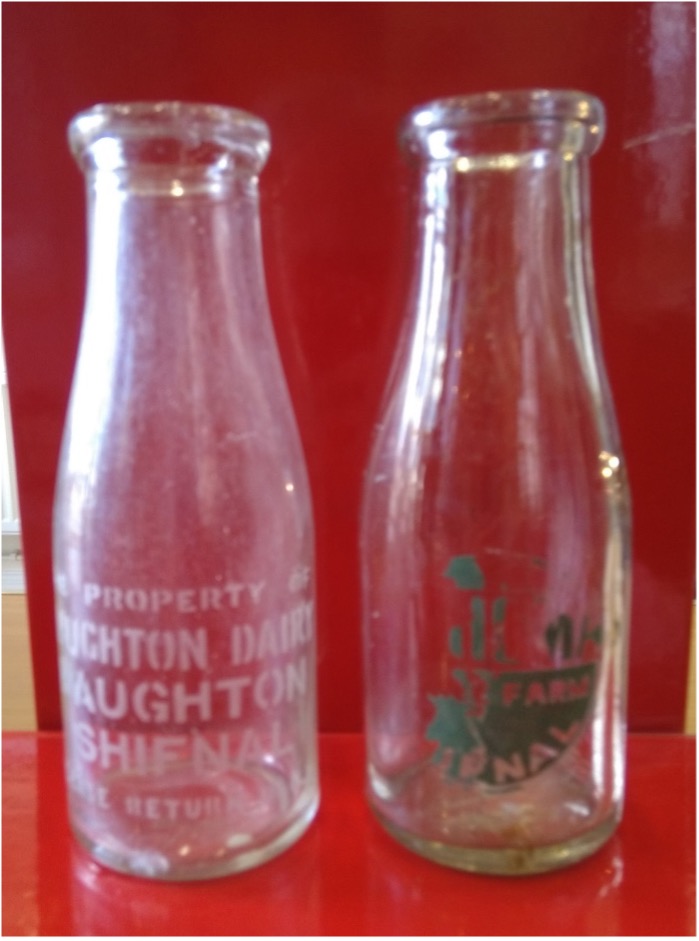
At the Fire Station, the local history collection includes many bottles, including milk bottles, which have miraculously survived intact. Whereas doorstep delivery dates back to the 19th century, the concept of delivering milk in bottles was introduced from the USA during the First World War. The bottles on the left probably date from the 1930s and were produced by two local farms – Haughton Farm and Knowle Farm. Haughton Farm was run by John Bishop for many years, and Knowle Farm by Mrs. Mary Lee. In 1919, she won the contract for supplying the workhouse with milk and this photograph, dating to the early 1920s, shows her with a very clean milk churn, which she used on her deliveries. A decade later Knowle Farm had been taken over by Jas Thomas and he probably adopted the use of milk bottles.
Co-incidently, the Local History Group has recently received some reminiscences from Mrs. Anne Bailey, nee Miller, who grew up in Shifnal just after the WW2. Among her stories are her memories of how milk was delivered at that time. As a very young child living in the High Street, in a cottage near the White Hart, the milk was supplied and delivered by the Dyke family of Curriers Lane, father Ernest and two sons Norman and Morley, with a pony and trap.
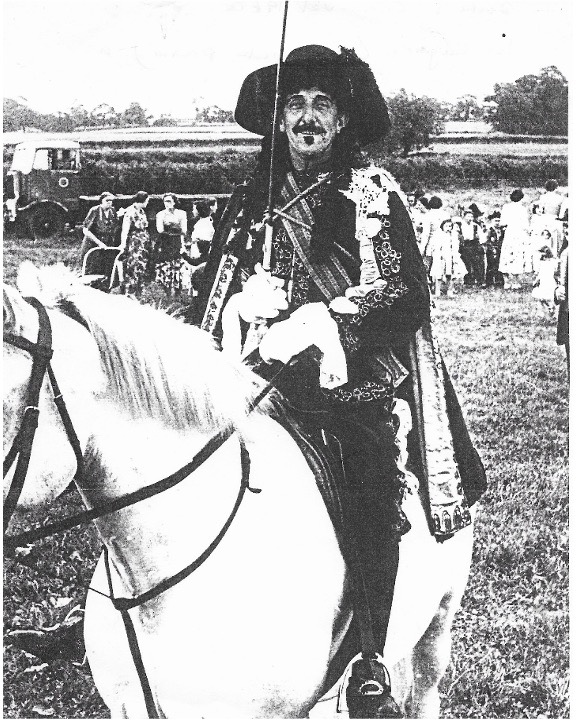
When the Miller family moved to Newport Crescent, their milk was delivered by Miss Connie Hughes. She would bring churns of milk on her pony and trap, which she ladled out into jugs. The Hughes dairy farm was called Admirals Farm and was situated where the estate now stands. Walter Hughes was famous for always leading the post-war carnivals on horseback dressed as a cavalier.
Anne Bailey remembers being sent to Admiral’s Farm to collect extra milk one day. Connie Hughes took her to the milking parlour to collect a pail of milk and then to a tiny dairy, where she poured the milk through a cooler before bottling it. The cooler consisted of rows of metal tubes which the milk ran over. She also remembers fetching milk from Dykes out-of-hours, by knocking on the door of the house next to the dairy. Before all houses had refrigerators, requests for extra bottles at the end of the day were frequent and met with courtesy.
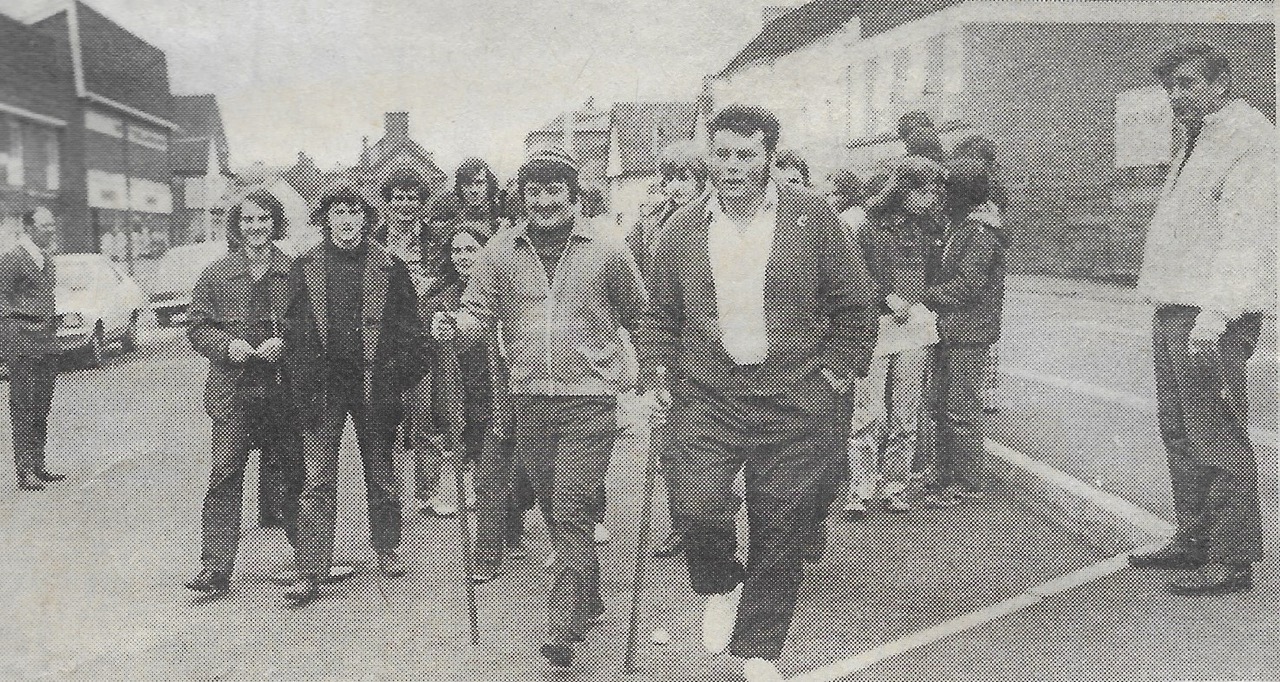
The Dyke family changed to an electric milk float in the mid-1950s. The post-war boom in the delivery of fresh milk every morning reached a peak in 1975 when 94% of milk was sold in recyclable glass bottles. It was only in 1990 that supermarkets began selling cheaper milk in plastic containers and cartons. Long term Shifnal milkman, Stephen Smallwood, who started his rounds in the mid-1970s, delivered to 750 houses each morning.
If you have a story to tell or a photograph to show us, please come to the Fire Station, Shrewsbury Road, any Friday afternoon, 2 – 4pm or Saturday, 10am – 12 noon.